A lift-plus-cruise UAV, seed-delivery module, and field station designed together around return, refill, recharge, and traceable missions.
Scope
Airframe and payload layout, energy sizing, service interfaces, electronics architecture and local control
Stage
Digital design study Resolved architecture and source artifacts
Evidence
Design files and documented assumptions Physical qualification remains open
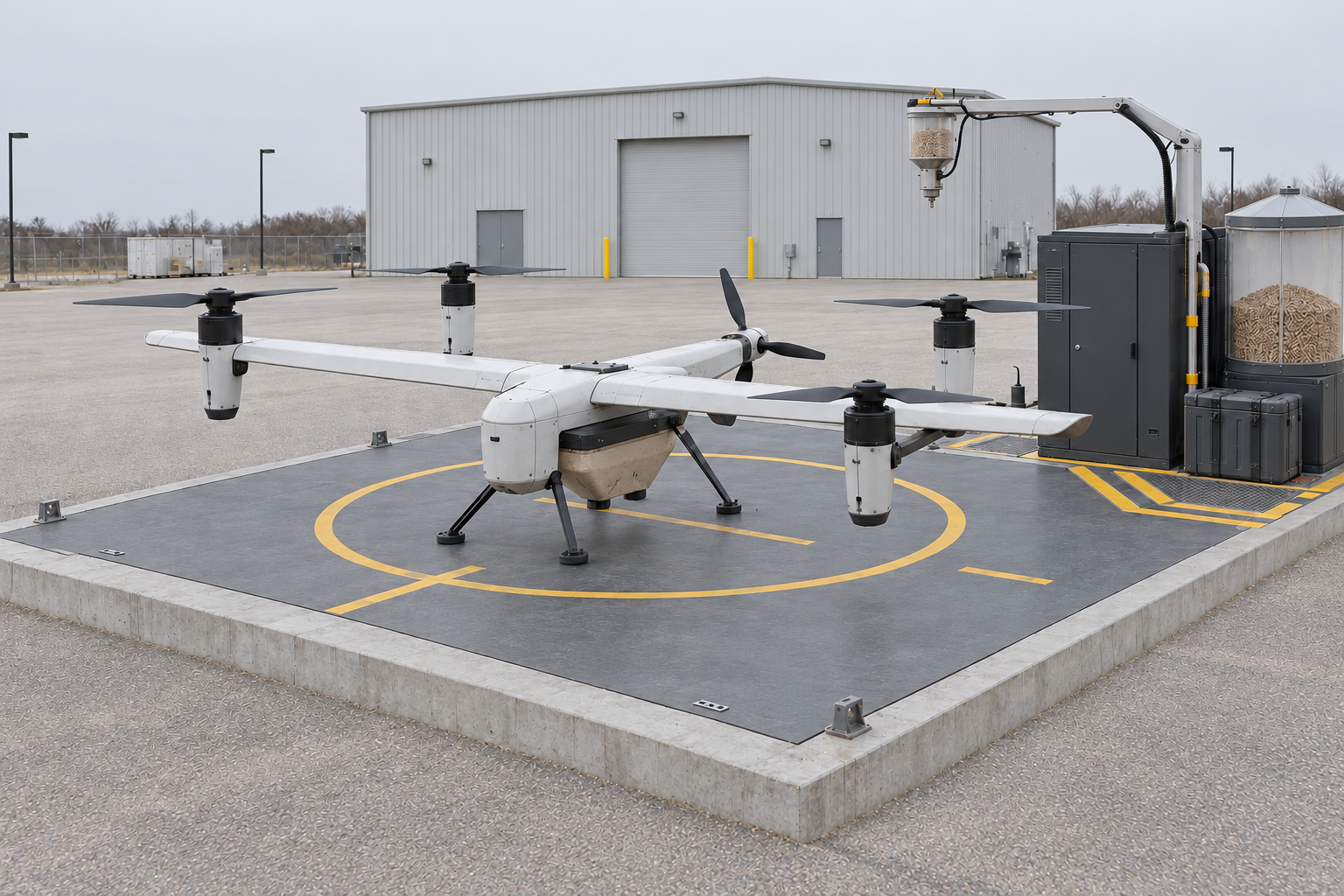
Original source design visualization of the R1 aircraft and service station. It represents design intent, not a photographed aircraft or field deployment.
The mission includes the next takeoff
R1 develops a reforestation aircraft and its field station as one system. A winged lift-plus-cruise configuration carries a removable seed module. The ground station captures the aircraft, transfers an identified batch, and restores pack energy before another authorized mission.
The design addresses the interfaces between flight, material handling, local control, and the service record. An operator retains intervention authority, while immediate flight recovery and mechanism stops remain local.
Keep the payload near the balance datum
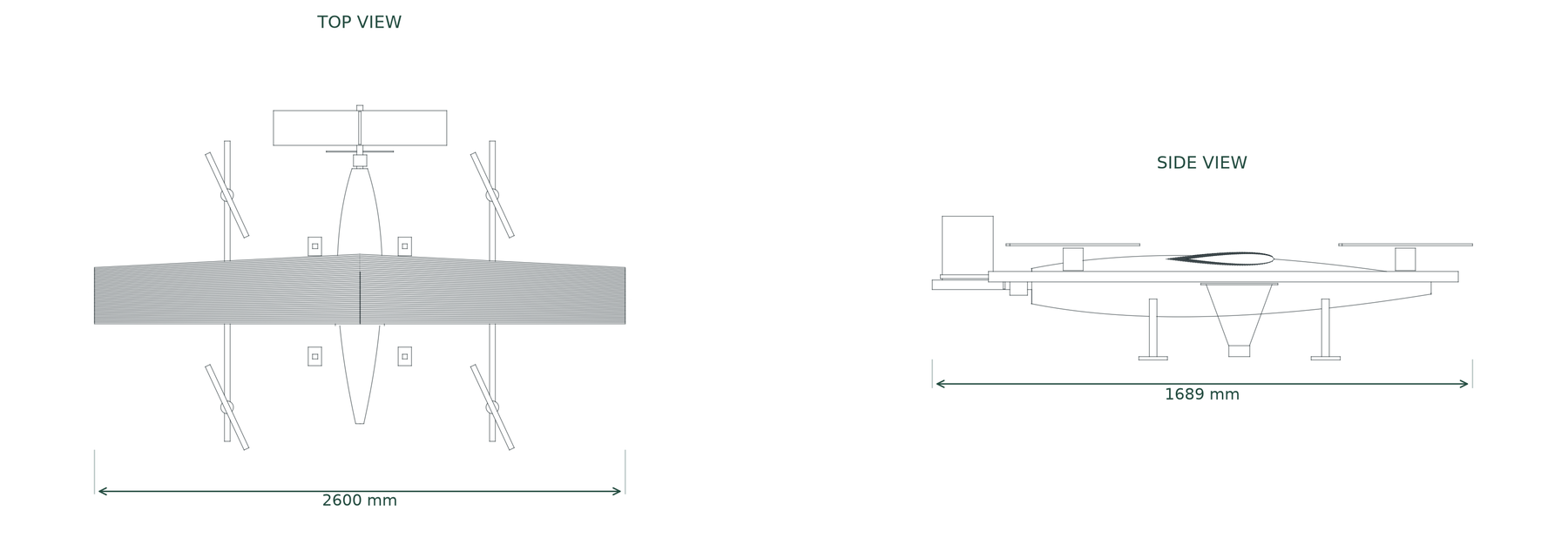
The selected airframe has a 2.60 m span, four vertical lift units, and a dedicated cruise propeller. The central hopper shortens the material path and places the changing payload close to the design centre of gravity. A 50-pellet nominal batch is the standard recipe; the larger hopper capacity remains a design limit rather than an automatic range claim.
Model-derived visible-edge projection from the native STEP/DXF package. Structural details, aerodynamic performance, and measured mass remain qualification work.
Refill and charge are measured transactions
Material transfer
An intermediate cup counts and weighs the batch before transfer. Cup loss is compared with aircraft gain. A mismatch, incompatible lot, or uncertain residual material holds the system rather than treating a commanded release as a completed delivery.
Electrical transfer
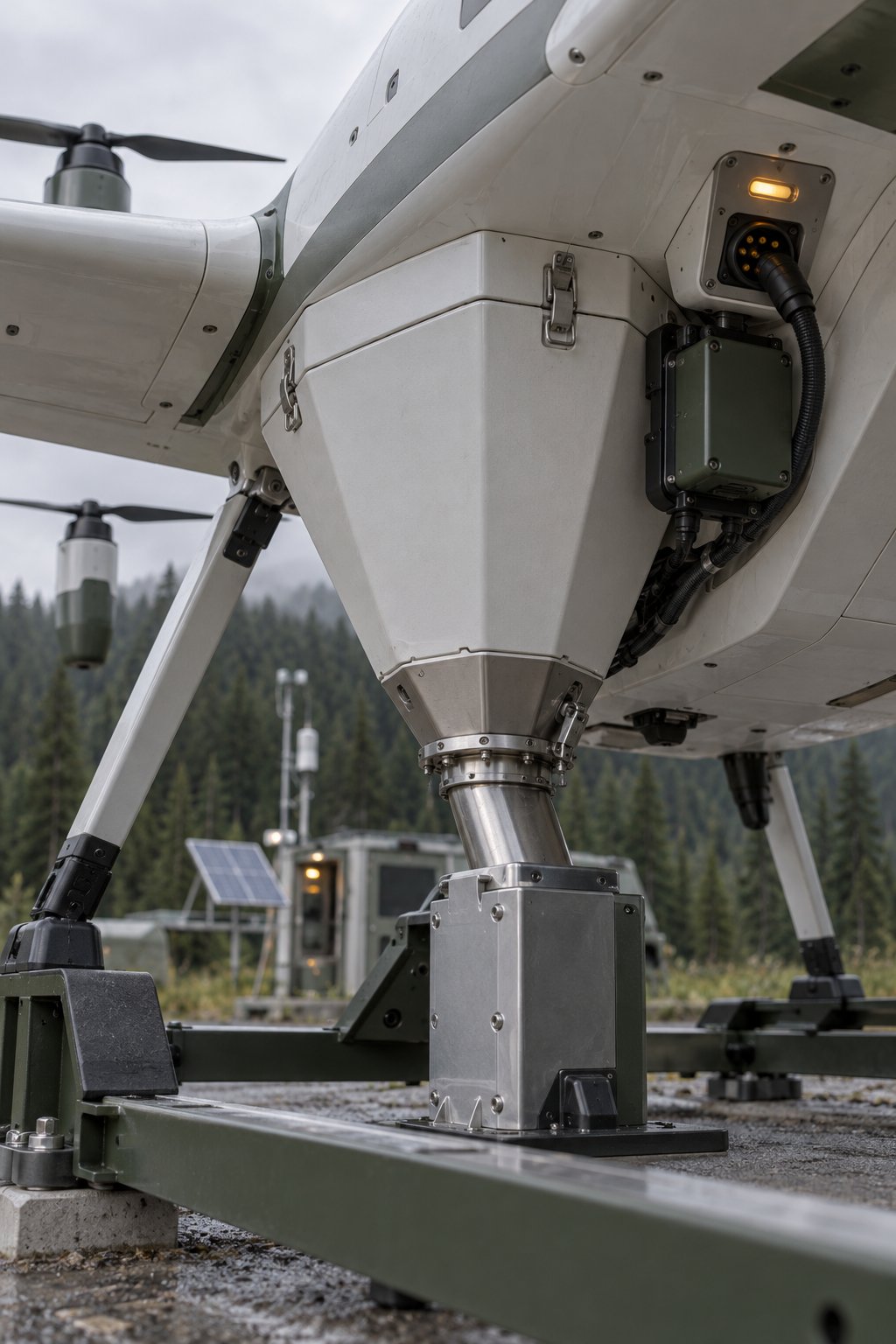
Charging requires a compatible pack profile, permitted connection state, and thermal conditions. Completion follows pack and charger acceptance criteria. Connector engagement and retained restraints block departure even when other launch inputs appear ready.
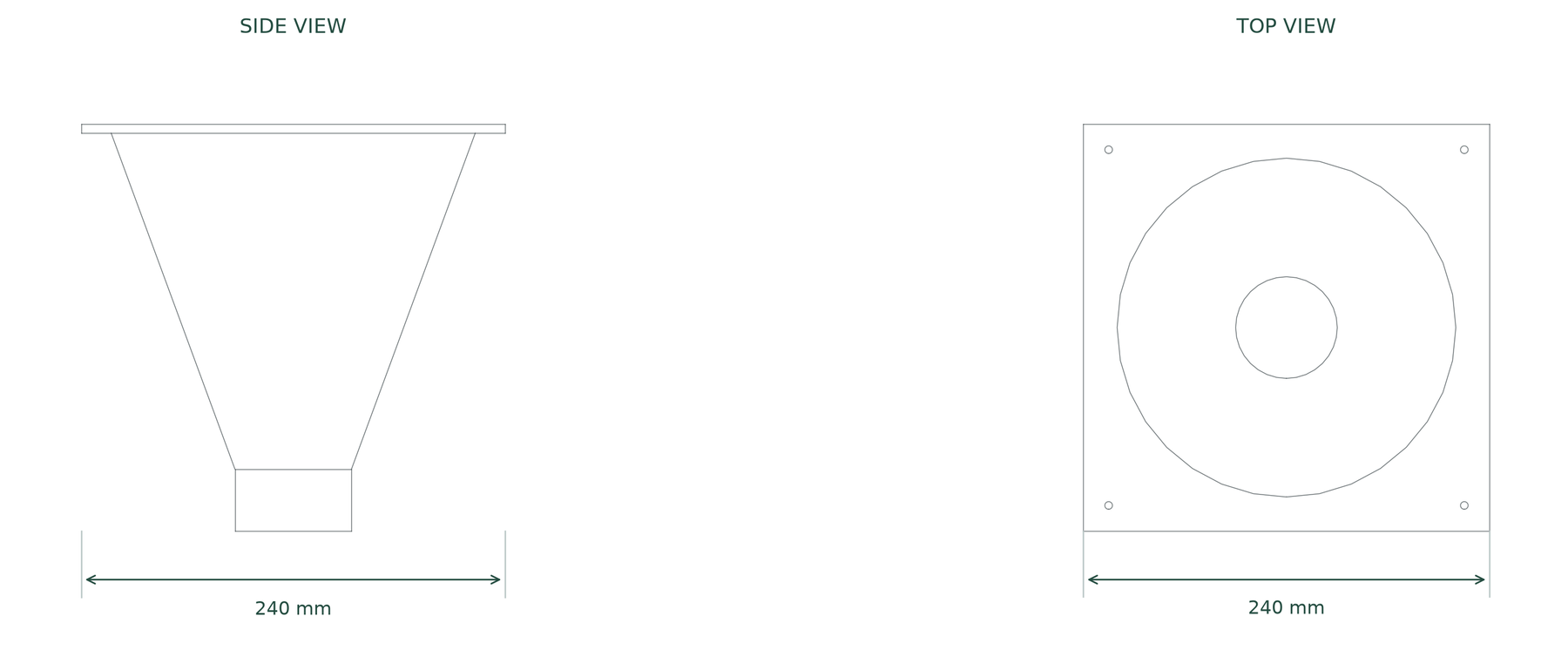
Frozen source service visualization. The parked arm is an installation envelope; actuator travel and force limits are still design tasks.Hopper and meter drawing developed from the editable CAD model; qualified seed-lot behavior and deposition must be measured.
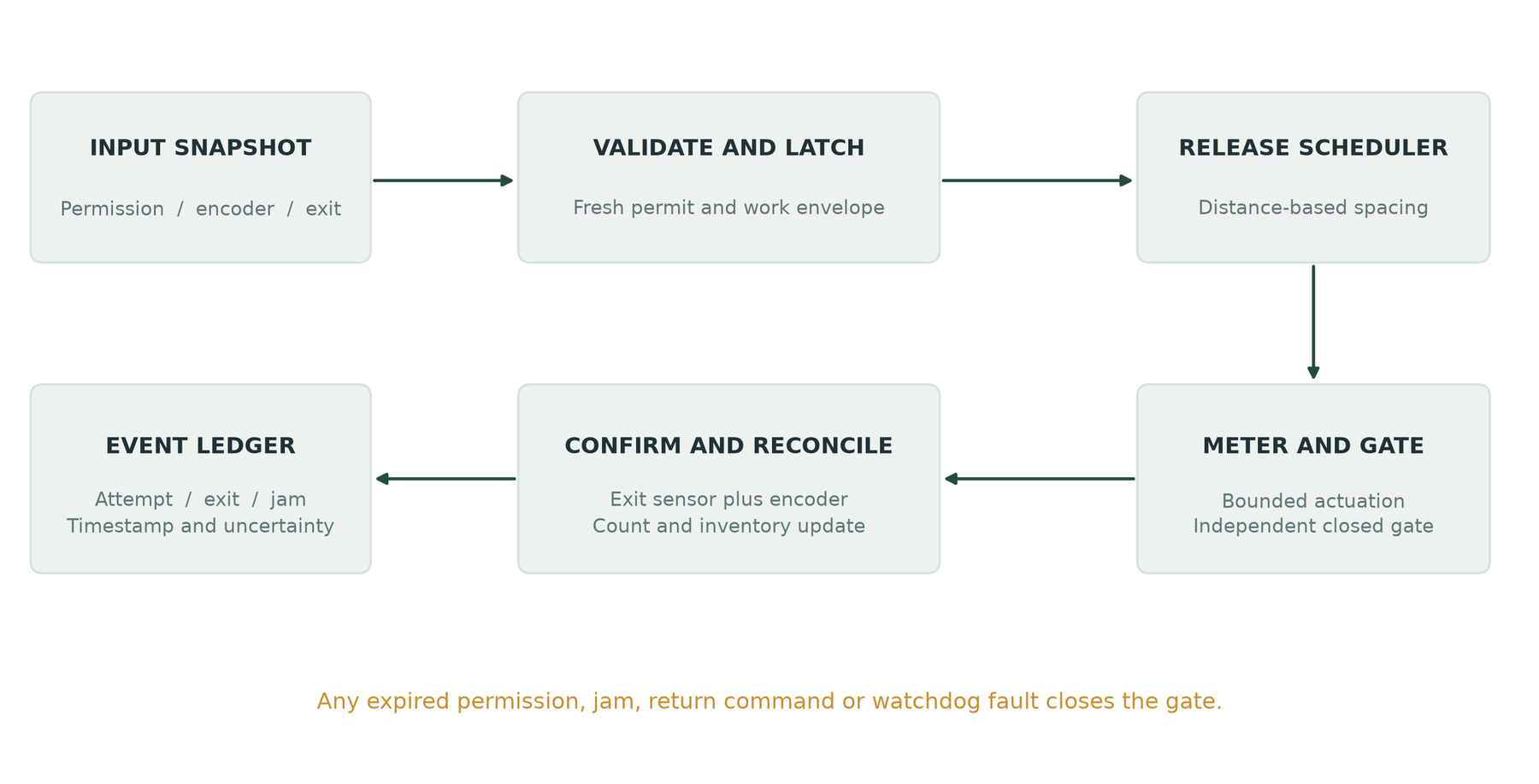
Firmware contract from the source design package. Release, return, and service responsibilities are explicitly partitioned.
Reference logic makes the review concrete
The package records 160 executed Python guard checks covering service, charge, launch, failure states, and all combinations of seven service guards. Seven STEP models, four DXF sets, and two native KiCad placement studies connect the logic to a selected physical layout.
Mission energy and reserve figures come from a declared arithmetic model. They support sensitivity review; they do not establish measured endurance. The source’s three-sortie trace is a scripted illustration, not a flight simulation or physical operation.
Delivery is separate from restoration
The record distinguishes planned, attempted, sensor-confirmed, and ground-verified placement. A restoration specialist owns species, provenance, density, season, and site suitability. Ground observations link deposition to emergence and survival; a delivered pellet count cannot become a tree count.
Qualify propulsion, flight transitions, recovery behavior, and energy reserves on actual hardware.
Test capture, alignment, material transfer, and charge inhibits before unattended service.
Calibrate deposition with independently surveyed impacts and defined seed lots.
Develop structural, electrical, and manufacturing releases from the design envelopes.
The source is a resolved narrative design exercise. No aircraft or PCB was fabricated, and no physical flight or ecological trial occurred. Images are original concept visualizations or model-derived drawings. Software checks validate reference predicates only; native PCB files are unrouted placement studies.
Source basis: Reforestation R1 Design Specification Revision B, editable Design Package, reference logic and sizing model, 14 October 2026.
Developing a product with demanding subsystem interfaces?