An enclosed field station and resident survey robot developed around repeatable observation, protected return, and verified servicing.
Scope
Systems, station and vehicle geometry, electronics architecture, dock control and scientific data
Stage
Digital design study Resolved architecture and source artifacts
Evidence
Design files and documented assumptions Physical qualification remains open
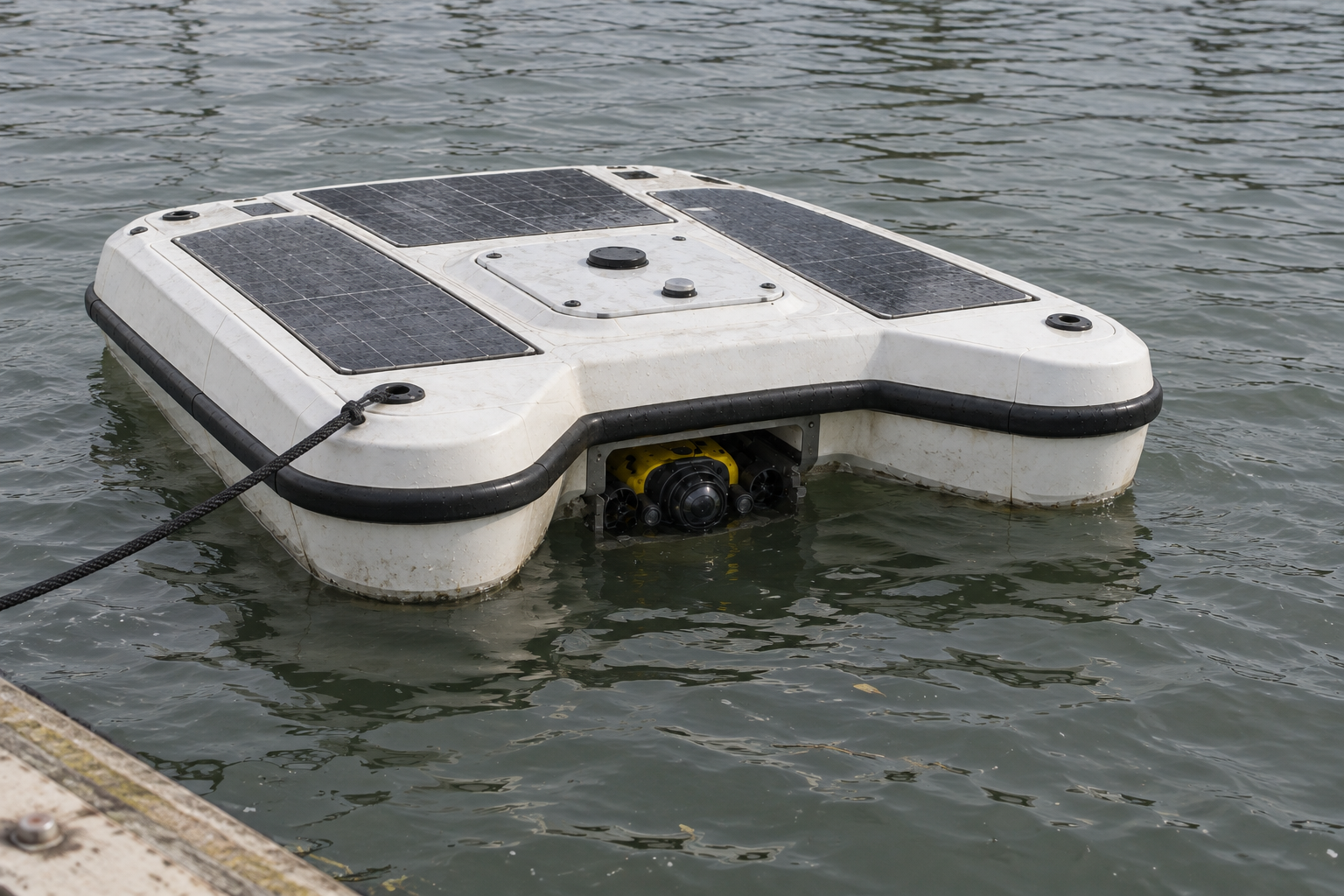
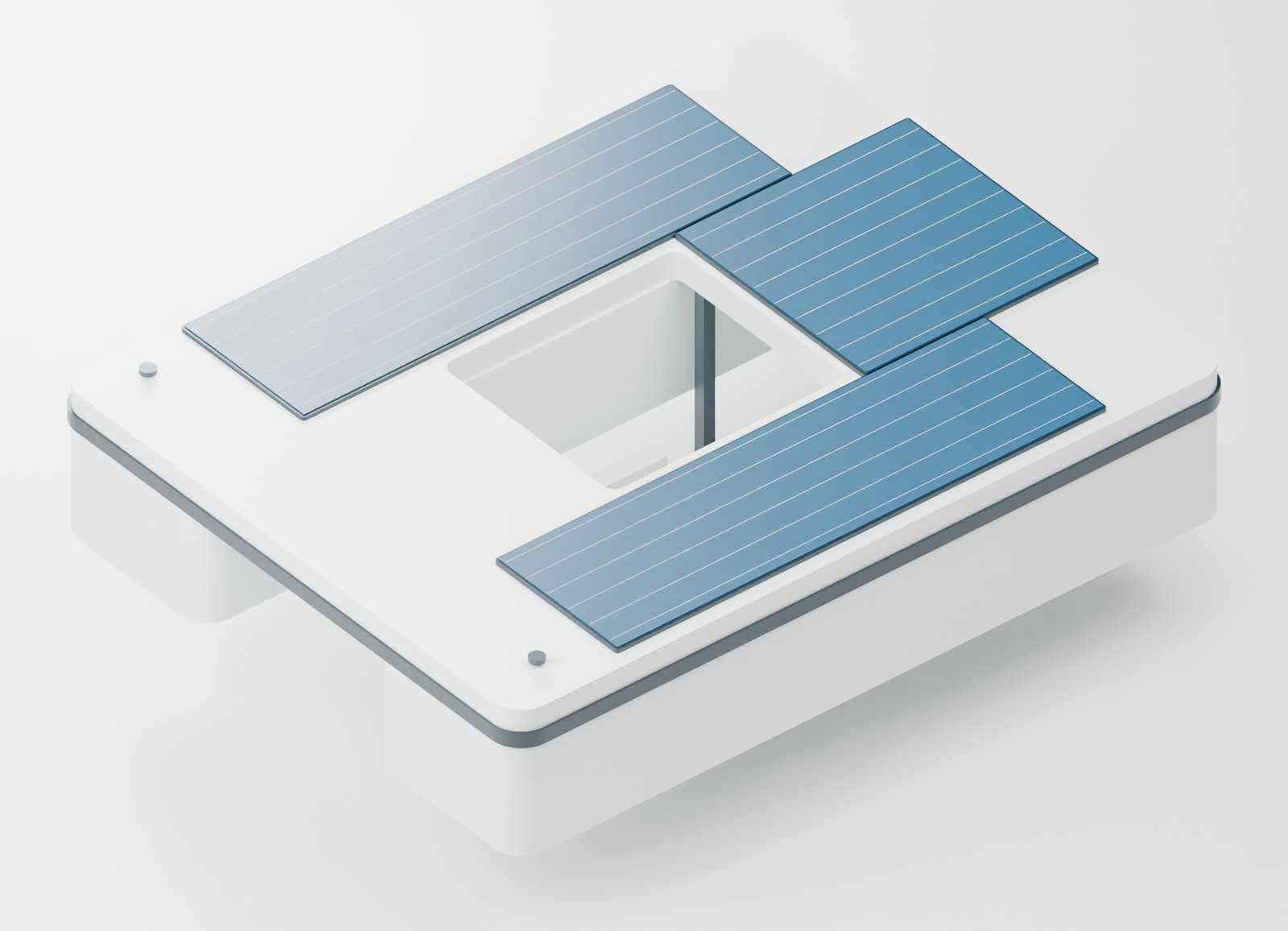
Original source design visualization. The field station and resident survey robot are a selected digital configuration, not photographed hardware.
The return is part of the product
Coral FS-01 combines a solar-assisted surface station, a resident underwater survey robot, and a protected servicing bay. The design links repeatable coral observations with the less visible work that makes another survey possible: return, capture, data receipt, and verified replenishment.
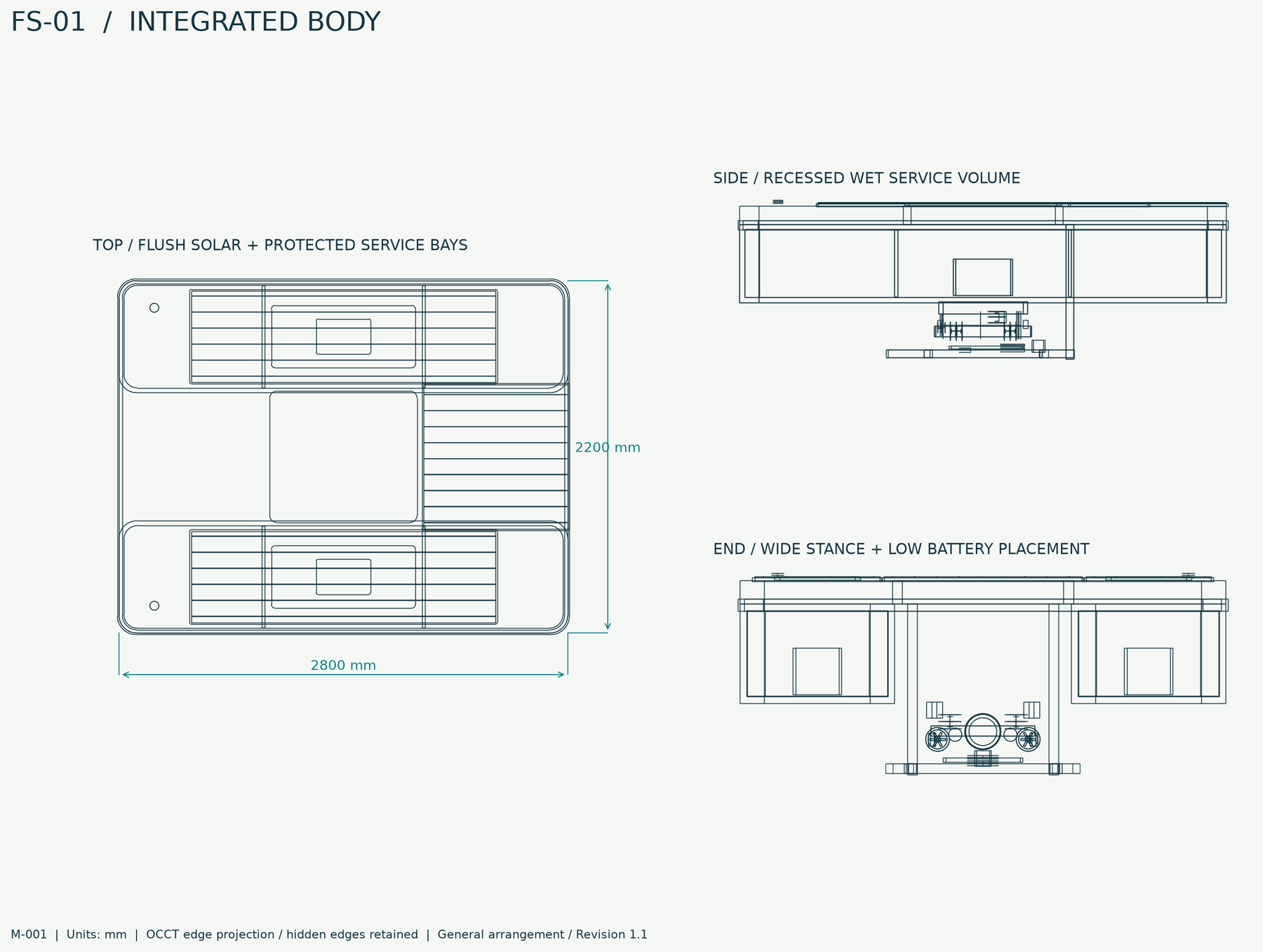
The selected configuration uses a wide enclosed body on a fixed mooring. A recessed central corridor provides the return datum, while low energy-storage compartments, dry electronics spaces, and accessible service points shape the station layout.
One interface, several conditions
Capture before energizing
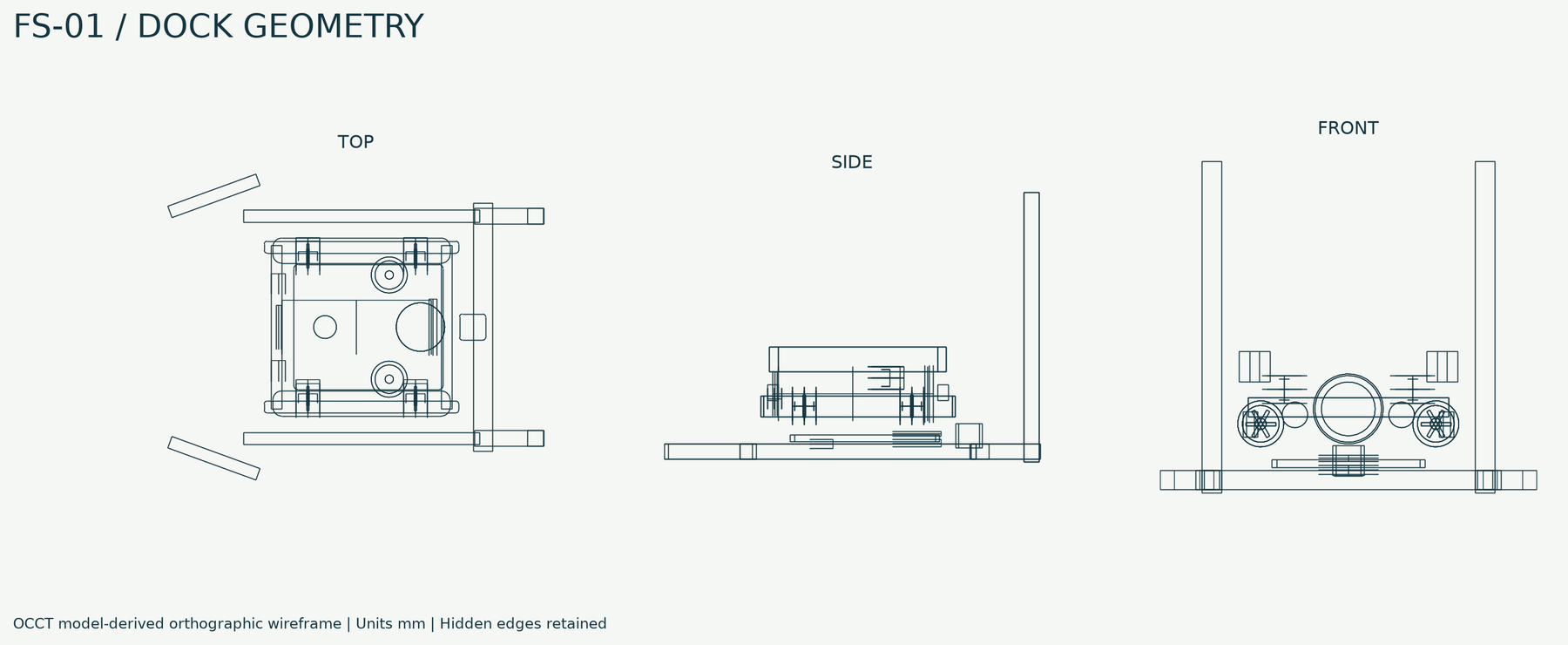
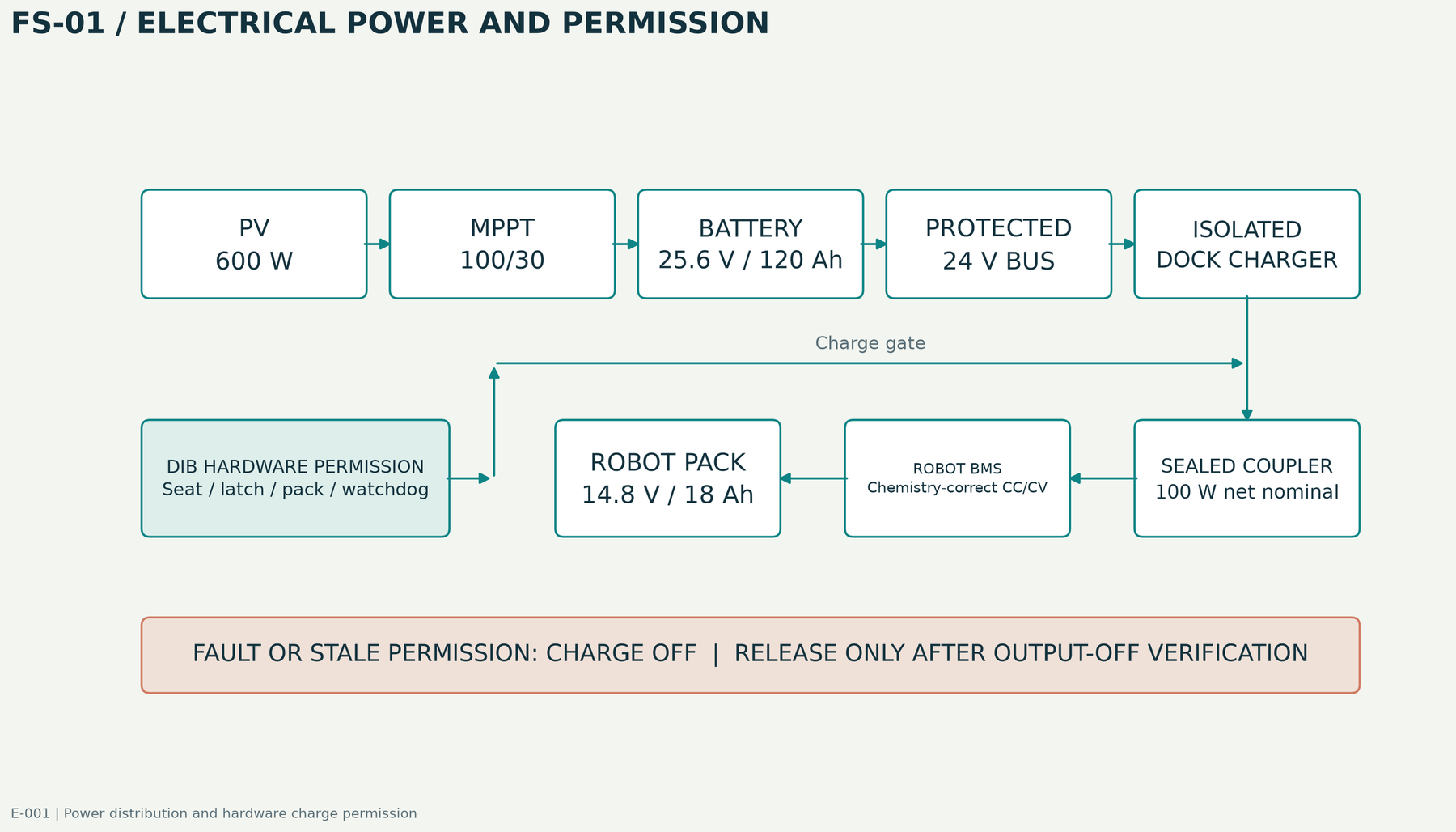
Guided approach establishes alignment; positive retention secures the vehicle. Charging permission requires independent observations of the dock and power state. A motion command or a completed timer is insufficient evidence that contact is safe.
Receipt before another mission
The robot retains raw observations while untethered. At docking, it transfers checksummed manifests to the station. Repeated transfers remain one observation; interrupted files remain incomplete. Survey and service events retain a shared configuration and mission identity.
CAD-derived station view from the editable source package. STEP geometry governs the layout; hydrostatics, clearance, loads, and fabrication require further engineering.
Mechanical and electrical development together
The six-thruster vehicle, cradle, and station are represented as editable subsystem assemblies. The return geometry gives the electrical interfaces a defined physical relationship. Two controller placement boards separate station supervision from dock interlocks, with board envelopes, mounting points, connectors, and component-height allocations carried into the mechanical package.
Station drawing derived from native CAD, with dimensional datums for the selected envelope.Dock drawing describes approach, retention, and servicing interfaces; it is not a tolerance-qualified fabrication release.
Electrical architecture separates energy paths, protection, supervisory control, and charge permission. The corresponding native PCB files are placement studies, not routed boards.
What the digital package establishes
Six STEP assemblies, an orthographic DXF set, native PCB placement files, and control and data diagrams make the interfaces inspectable. An executable 256-case Boolean guard audit checks the specified charging predicate. Those files provide a basis for design review and focused bench work.
What advances the design next
Close buoyancy, stability, mooring loads, sealing, and recovery access around a buildable configuration.
Develop component-level circuits, routed electronics, harnesses, and physical charge-inhibit tests.
Measure approach, capture, retention, and data-transfer behavior in controlled water conditions.
Validate comparable image capture against calibration and target-quality requirements before making ecological interpretation claims.
This is a digital design study. Source imagery includes frozen generated industrial-design visualizations and CAD renders. The source publication’s commissioning and residence campaigns are fictional narrative records and are not presented here as measured outcomes. No fabricated station, field trial, or qualified electronics is claimed.
Source basis: Coral FS-01 System Specification R1.1 and companion Digital Design Source Package, 14 October 2026.
Developing a product with demanding subsystem interfaces?